Monday, 13 November 2017


Thursday, 9 November 2017
News Artical Analysis

Headline
Works as an enigma (Barthes), teasing the audience to want to find out more. They are an important hook to capture the audience and encourage them to pay attention to the article. There is an assumption in this headline that the audience will know who Brady is, and the word ‘moor’ will remind them if they have forgotten.
Intro
Like the headline, the hook should grab the audience’s attention and encourage them to want to read the rest of the article. Intros are usually very short – maybe 30 words – and should be able to be read and digested quickly and easily. The intro sums up the main point of the article – in this case the discussion of Brady’s possible final resting place.
Focus
Journalists often present stories from a human interest angle, putting people at the centre of their stories. Quotes are often used to give a human touch by emphasising the importance of the people in the story. In this instance, Brady is the focus but the sympathy clearly lies with the victims and their families. A quote from one of the victim’s brothers shows this.
Narrative
Reveals information in such a way as to keep the reader interested but also to aid their understanding of what is going on.
Structure
Short paragraphs are important in news reports and each one is used to develop the narrative of the story a little bit more. There is also often a structure to news stories in that all the important info is given at the start and less important details are added later. In this example, the important info is that a coroner will not release Brady’s body until he is satisfied his ashes won’t be scattered on the Moor. Arguably less important information comes later such as how he died.
Broadsheet vs Tabloid

The Guardian:
(Broadsheet - Left wing Labour supporter)
The Guardian has a heavy political approach to their news
reporting which can be seen in the main article on the front page of the 8th
November 2017. The Guardian consists of a large coverage of articles on the
front page as apposed to being photograph based such as a tabloid like The Sun.
Due to The Guardian being a Broadsheet, the Guardian tries to report on more
hard news reports such as the political environment and the economy rather than
soft news like celeb gossip and sports news. The Guardian markets to the A, B
,C1 audiences as it is a tabloid that wants to interest the higher intellects
of the public. The age demographic for the Guardian is 25 - 40 as its left wing
views appeal more the a younger audience.
The Sun:
(Tabloid - Right wing Conservative supporter)
 The Sun has a very soft news approach to their reporting due
to them being a tabloid. This can be seen from the front page of the November
8th 2017 edition with the high photograph to written text ratio, the photograph
being a picture from night time TV, Strictly, which is soft news. The Sun is a
tabloid so therefore tries to market themselves to the C2, D ,E demographics
with mainly reporting on soft news to try attract the attention of more lower class
buyers who want to know all of the celebrity gossip or sports news. Tabloids
such as The Sun are losing buyers due to the celeb gossip appearing first on
social medias such as twitter therefore making tabloids and newspapers obsolete
as people have already heard about the news for free earlier. Tabloids such as
the Sun try market themselves to the age demographics of 25-30 and 55-65 as the
celeb gossip appeals more to the 25-30 year olds but the right wing views
appeal to more of the older generations who believe in traditionalism and the
government.
The Sun has a very soft news approach to their reporting due
to them being a tabloid. This can be seen from the front page of the November
8th 2017 edition with the high photograph to written text ratio, the photograph
being a picture from night time TV, Strictly, which is soft news. The Sun is a
tabloid so therefore tries to market themselves to the C2, D ,E demographics
with mainly reporting on soft news to try attract the attention of more lower class
buyers who want to know all of the celebrity gossip or sports news. Tabloids
such as The Sun are losing buyers due to the celeb gossip appearing first on
social medias such as twitter therefore making tabloids and newspapers obsolete
as people have already heard about the news for free earlier. Tabloids such as
the Sun try market themselves to the age demographics of 25-30 and 55-65 as the
celeb gossip appeals more to the 25-30 year olds but the right wing views
appeal to more of the older generations who believe in traditionalism and the
government.Wednesday, 8 November 2017


Friday, 27 October 2017
Same Love Advert: Sexuality Awareness
1) What was the task you were given and who was your target audience? As the audience wasn't typical of the product how did you manage to sell it? What was the name of your brand?
Our task was to create an advert that would spread awareness for sexuality. We specifically targeted the audience at homophobic bullies and everyday teenagers. The message was that you don't realise the effects until It effects you so we reversed the sexuality roles to make gay more acceptable than straight. It shows what homophobic bullying can do and our goal was to show awareness of this bulling and that you should be accepting and a friend to everyone regardless of sexuality. Our brand was called Same Love because love is love no matter what its all the same.
2) Who did you work with and how did you divide the research, planning, filming and responsibilities?
I worked with Mia, Jamie, Natasha and Alistair. We divided our roles but also worked cohesively as a team. Natasha did all of the filming, and all of us posited ideas and came up with our story. Jamie helped with the brainstorm and Mia, Natasha and I did the story board. Mia and Jamie both participated in acting. Mia started of the editing and I took over and completed the majority of it whilst being an actor. Alistair did the voice over and helped with tech things.
3) How did you plan your sequence?
To plan the sequence we made a story board and draw each shot and wrote what happens, the camera angle and length of shot.4) What research and planning did you undertake?
We planned by putting all our ideas onto this whiteboard in a mind map/brainstorm.
 We also researched sexuality awareness pages and videos.
 5) What was you initial feedback? What did others say about your production? How successful was your sequence?
Others quoted that it put the message across clearly and was very different and creative. The editing and music apparently worked well together too. Overall I believe it was successful.
6) Identify what went well and with hindsight what you do to improve/do differently.
I think our planning/ideas were good and that the filming was well done and editing done well. However I do believe that a lot of things could be improved such as organization and effort from others, also at times our ideas were jumbled and we had to shorten it and it was quite hard to make the message clear.
7) What have you learnt from completing this task (groups skills, communication, compromise, using your initiative, creative input, production skills, editing etc)
I have learnt how to take initiative and output creative ideas. I've also learnt to take others ideas on board to make everyone happy. I also learnt major editing skills and also how to merge to different sounding pieces of music together and timing certain scenes to specific beats in the music.
8) Looking ahead, how will this learning be significant when completing your future productions?
This will help me achieve better work due to good communications skills, more effort and hard work cooperating with others.
Friday, 13 October 2017
Stereotypes
Gender-
Woman stereo types:
An example of sexism in the media

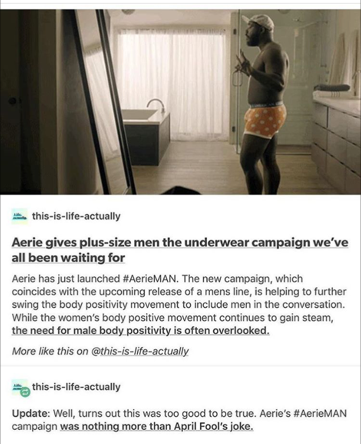
Woman stereo types:
- Woman are weak
- Woman need a man
- Woman are girly
- Woman are only good for sex
- Woman are submissive
- Woman are passive
- Woman are easy to walk over and can be controlled
- Woman are sensitive
- Men are manly
- Men can't cry
- Men are strong
- Men are unemotional
- Men are aggressive
- Men are dominant
An example of sexism in the media


Thursday, 12 October 2017

Saturday, 7 October 2017
Vocabulary
Genre
Semiotics
Denotation
Connotation
Mise En Scene - CLAMPS (costume, lighting, actors, makeup, props, setting)
Semiotics
Denotation
Connotation
Mise En Scene - CLAMPS (costume, lighting, actors, makeup, props, setting)
Club Advert Plan

Shot 1: moving right (panning around), 2 seconds

Shot 2: Still shot looking down zoomed in, 1 second

Shot 3: Zoomed in focused on face, still shot, 3 seconds

Shot 4: Still shot, zoomed in o face, 2 seconds

Shot 5: Moves from one person to the other in a quick motion, 1 second

Shot 6: Still shot, zoomed on face, 1 second

Shot 7: Transitions from last shot with a quick blur, 1 second

Subscribe to:
Posts (Atom)